Manufacturing Operating System (MOS)
Modern manufacturing plants don’t fail due to a lack of technology—they struggle because their systems were never designed to operate as a unified manufacturing environment. Over time, manufacturers implement ERP platforms, production tools, quality systems, spreadsheets, and cloud services to solve individual needs. When these technologies operate in isolation, they create operational friction instead of operational clarity, making it harder to align processes, trust data, and scale manufacturing operations
ERP systems track inventory and financial data, production relies on local tools or manual inputs, quality data resides in separate applications, and user access is managed inconsistently across platforms. As a result, critical reconciliations—such as inventory versus production output, quality results versus released material, and labor and downtime versus throughput—are performed manually, outside the integrated systems that should already be aligned.
This fragmentation forces plants to operate reactively. Data becomes something to reconcile instead of This fragmentation forces manufacturing plants to operate reactively rather than strategically. Data becomes something to reconcile instead of something to trust, and technology becomes something to manage instead of a system that actively supports manufacturing operations and decision-making.

Why Manufacturing Technology Needs a Unified Digital Architecture
Manufacturing operations are inherently cross-functional. Production, quality, maintenance, finance, and leadership all rely on the same underlying manufacturing data, yet most plants operate with systems that were never designed to share a common structure or unified architecture.
As manufacturing organizations grow, this disconnect becomes more pronounced. Reporting is assembled after the fact, approvals live in email threads, access is granted inconsistently, and critical workflows depend on a small number of individuals who “know how things really work.” What should be automated controls instead become manual checkpoints, increasing operational risk, slowing decision-making, and limiting scalability.
Without a unifying architecture, adding a new production line, expanding to another facility, or iWithout a unifying architecture, adding a new production line, expanding to another facility, or introducing automation requires workarounds rather than intentional system design. At this point, manufacturing technology stops enabling the business and instead becomes a constraint on growth, efficiency, and operational scalability.
How Manufacturing Technology is Unified – MOS
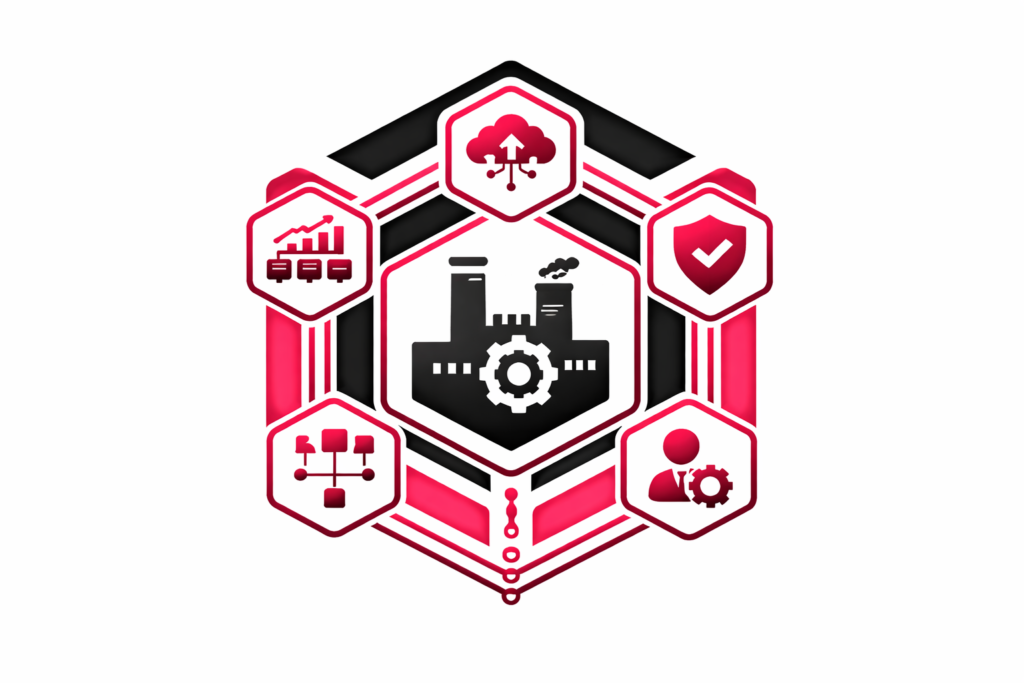
The Manufacturing Operating System (MOS) is an architectural approach that unifies manufacturing operations and modern IT platforms into a single, cohesive system. Instead of treating ERP, cloud services, identity management, automation, and plant workflows as separate initiatives, MOS defines how these components work together as one integrated operating model for modern manufacturing environments.
MOS is not a software product. It is a designed framework that aligns manufacturing processes with platforms such as ERP, Microsoft 365, identity management, automation tools, and data services—ensuring that information, access, and workflows follow consistent rules across the plant.
This is where IT stops being “support” and becomes part of how the plant actually runs.
Core Capabilities of the Manufacturing Operating System (MOS)
Unified System Architecturey
MOS establishes a unified technology foundation where ERP, Microsoft 365, identity, and operational systems are designed to function within the same ecosystem. Users are defined once, data flows follow clear ownership rules, and systems integrate by design rather than through one-off connections.
This eliminates silos and reduces the need for manual reconciliation between disconnected tools, allowing each system to perform its role without conflict.
Process-Driven Automation Across the Plant
Manufacturing workflows extend far beyond the shop floor. Quality approvals, production reporting, inventory movements, maintenance requests, and financial validations all require coordination between systems and people.
MOS embeds automation directly into these workflows using modern tools such as Power Automate, ERP process triggers, and role-based approvals. Instead of relying on emails, spreadsheets, or informal handoffs, processes are executed consistently and traceably across departments.
Automation becomes a control mechanism, not just a productivity enhancement.
Identity, Access, and Operational Security
Compliance becomes difficult when systems are disconnected and processes vary by department or loIn manufacturing environments, access is operational—not just technical. Who can release material, approve quality results, adjust inventory, or view production data has real downstream impact.
MOS uses centralized identity platforms such as Microsoft Entra ID to align access with operational roles across ERP, Microsoft 365, and plant systems. This ensures that users have the right access at the right time, while maintaining visibility and control across the environment.
Within the Manufacturing Operating System (MOS), this alignment is achieved through a defined set of architectural components:
- System Integration & Data Flow Design
- Identity, Access, and Role Alignment
- Process-Driven Controls and Approvals
- Auditability and Traceability by Design
- Standardized Patterns for Scale and Expansion
A Partner That Understands Both Manufacturing and IT
Manufacturing companies don’t need generic IT services—they need partners who understand how technology intersects with real plant operations. Machina IT brings over 20 years of experience working directly with manufacturers, designing systems that align production realities with modern IT platforms.
Are you ready to partner with industry experts that can make your IT work for you? Contact us today for By approaching technology as an operating architecture rather than a collection of tools, Machina IT helps manufacturers turn IT into a stable, scalable foundation for operations, compliance, and continuous improvement.